Clients rarely want a single service. They expect SEO, paid ads, content, social and the website to pull in the same direction. Yet hiring a specialist for each of those areas means more salaries, more management and more pressure on your delivery team.
For a growing agency, that’s often what caps the number of clients it can take on.
White label marketing offers a way round it. You bring in experienced specialists, widen what you sell and do more for your clients, without staffing every discipline yourself.
What Is White Label Marketing?
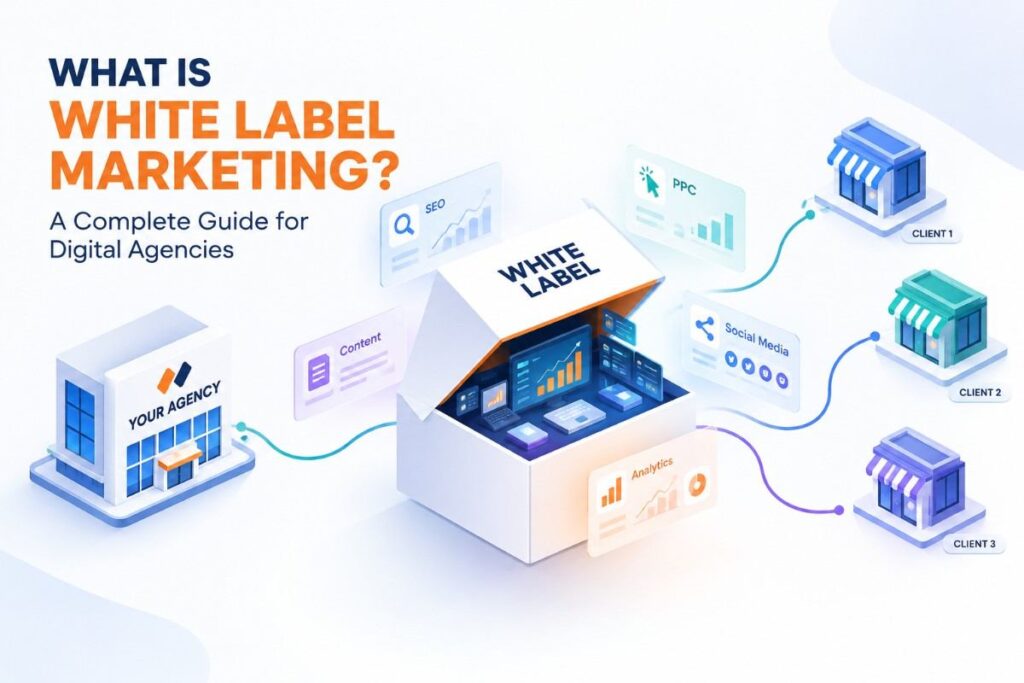
White label marketing is a business model where a specialist provider delivers marketing services and another company sells them under its own brand.
Say your agency builds websites, and a client asks for SEO. Rather than turning them away, you partner with a white label provider to do the SEO. You stay in charge of the relationship, present the work under your brand and bill the client at the price you’ve agreed with them. The provider stays out of sight.
A white label marketing agency partnership also helps when your team has a skill gap, when workloads spike or when a project needs more hands than you have.
How White Label Marketing Helps Digital Agencies
It’s easy to dismiss this as outsourcing under a nicer name. In practice, it lets an agency take on more delivery while keeping its attention on clients and growth.
1. Expand Your Service Offering
Most clients prefer one agency to look after several marketing needs. The difficulty is that each service needs its own people, tools and way of working. With white label support, you can add SEO, PPC, content or social media management to your line-up without building a team for each one.
2. Scale Without Raising Hiring Costs
Hiring experienced marketers takes time, and the costs don’t stop at salary. There’s training, software subscriptions and the management time to oversee them. A white label partner gives you extra capacity when you need it, so new projects or busy periods don’t force you to add permanent headcount straight away.
3. Deliver More Efficiently
When your team is juggling several campaigns, something usually gets squeezed, whether that’s research, reporting or quality checks. If specialists handle the day-to-day execution, your people can spend their hours on strategy, client conversations and growing accounts.
4. Protect Your Margins
More services don’t automatically mean more profit. Delivery costs, management time and what you charge the client all shape the margin. With a white label partner, you can compare their fees with your client pricing before you accept the work. Clear scopes and tidy processes make it easier to grow revenue without taking on fixed costs you don’t need.
What Services Can You Offer Through White Label Marketing?
Your agency doesn’t have to stay within its current specialisms. White label partnerships can broaden what you sell.
White label SEO: SEO covers keyword research, technical audits, on-page work, content improvements and link building. A specialist can handle the activity while you oversee the strategy and report progress to the client.
White label PPC: Paid advertising needs constant attention to campaigns, budgets and performance. White label PPC support lets you run Google Ads and other paid campaigns without keeping a dedicated ads team on the payroll.
White label content marketing: Keeping up with content gets harder as your client list grows. External writers can cover blog posts, landing pages, website copy and planning, which helps you hit your deadlines.
White label social media marketing: Content calendars, post creation and scheduling all repeat week after week. A partner can take those tasks on while you manage client expectations and campaign goals.
White label website design and development: If clients ask for a site alongside their marketing, a specialist partner can build pages, landing pages and provide ongoing development support, so you don’t need a larger technical team.
Which mix suits you depends on what your team already does well, what clients are asking for and where you want to grow.
What Are White Label Digital Products?
Services aren’t the only thing you can add. White label digital products let you offer software, tools and digital resources under your own brand.
Typical examples include branded reporting dashboards, SEO analysis platforms, social media management tools, marketing automation software and website templates.
A white label reporting platform is a good illustration. Clients get campaign updates in a portal with your agency’s name on it, and you don’t need to develop any software yourself.
Before you choose a product, look closely at its customisation options, licensing terms, integrations, data security and support. Those details decide whether it fits the way your agency works and what your clients need.
How Does a White Label Marketing Partnership Work?
A partnership runs best when everyone knows who is responsible for what, how often you’ll talk and how work moves from request to delivery.
- Work out what you need. Decide which services your clients are asking for, and where your team is short on time or expertise.
- Choose a provider. Look at their experience, the quality of their work, their capacity and whether they’re comfortable working under your brand.
- Agree scope and pricing. Settle deliverables, turnaround times, how many revisions are included, reporting and costs before any work starts.
- Review what comes back. Check it against your own standards and the client’s brief before it goes anywhere near the client.
- Look after the client. Share progress, explain the results and point out where performance could improve.
With a process like this, you keep control of the client experience while your partner gets on with the agreed work.
Read More: How White Label Services Can Help Agencies Enter New Digital Marketing Channels
What to Look for in a White Label Marketing Agency
Your provider’s work reflects on you. If you choose purely on price, you may pay for it later in poor quality, slow replies or missed deadlines.
Here’s what to check:
- Relevant experience. They should have delivered the kind of work your clients ask for.
- Quality control. A clear review process keeps standards steady across projects.
- Transparent reporting. You need to be able to explain progress and deliverables to clients with confidence.
- Room to grow. They should cope with more work as your agency gets bigger.
- Confidentiality. Ask how they handle client information, account access and deliverables.
- Flexible terms. Understand pricing, minimum commitments, revision policies and how to end the agreement before you sign.
Is White Label Marketing Right for Your Agency?
It can be a strong fit if you regularly turn projects down because you’re short on capacity, get asked for services outside your expertise or want to grow without taking on more fixed costs.
That said, outsourcing doesn’t replace good account management. You still need to understand what the client wants, review the work and make sure it matches the agreed strategy.
A sensible way in is to start with one service or a single, well-defined project. See how the provider performs on quality, communication and cost before you widen the partnership.
Grow Your Agency with White Label Marketing Services
Your agency shouldn’t have to pass on opportunities just because the team can’t cover every request.
With the right white label marketing partner, you can add services, draw on specialist skills and take on extra projects without building everything in-house.
Wildnet Technologies helps digital agencies increase delivery through white label solutions across SEO, PPC, digital marketing, content and website development. With an experienced team working quietly behind your brand, you’re free to concentrate on winning clients, building stronger relationships and growing your agency.
Frequently Asked Questions
1. How is white label marketing different from traditional outsourcing?
White label marketing allows an agency to sell services delivered by another provider under its own brand. Traditional outsourcing may involve a third party working directly with the client or being identified as the service provider. In a white label arrangement, the agency typically retains control of the client relationship and presents the deliverables as part of its own offering.
2. Can agencies use white label marketing services alongside their in-house teams?
Yes, agencies can combine white label services with in-house delivery. Their internal teams can focus on strategy, client communication and quality checks, while external specialists handle specific tasks or additional workloads. This approach helps agencies fill skill gaps and manage more projects without replacing their existing teams.
3 Who owns the work created through a white label marketing partnership?
Ownership of work created through a white label marketing partnership depends on the contract between the agency and the provider. Agreements should clearly define ownership rights for deliverables such as content, designs, reports and campaign assets, including any licensing restrictions. Agencies should confirm these terms before work begins to avoid disputes and ensure they can use the deliverables as agreed with their clients.
4 How do agencies manage client accounts when working with white label providers?
Agencies typically retain responsibility for client relationships, communication and overall account management, while white label providers handle the agreed marketing tasks. Clear workflows, defined responsibilities, regular progress updates and consistent reporting help both parties stay aligned. Agencies should also review deliverables and campaign performance before sharing updates with clients to maintain service quality and accountability.