
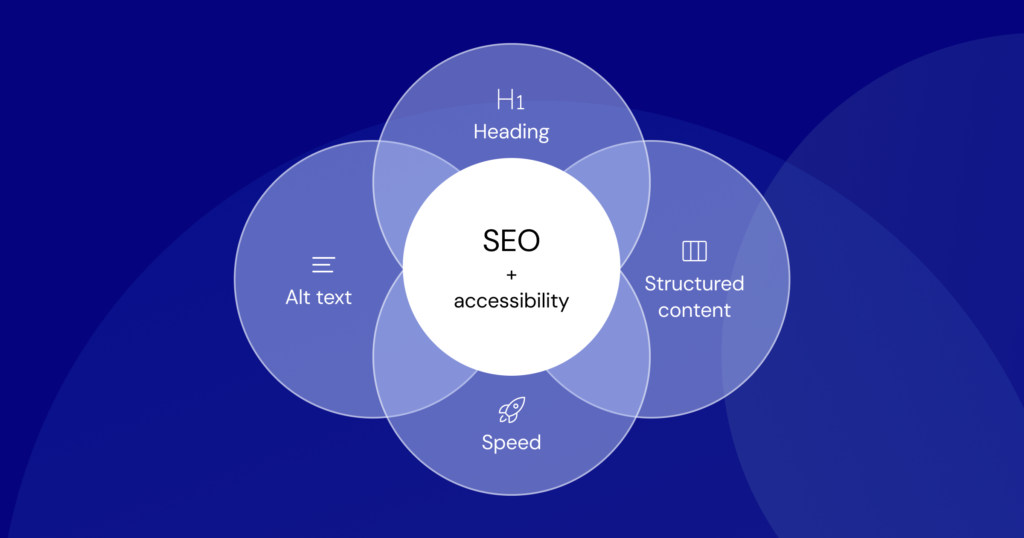
Search is no longer limited to text-based queries. With the rise of AI-driven platforms like Google Lens & voice assistants like Google Assistant, users now interact with search engines through images, voice, and even video.
This shift has given rise to Multimodal SEO, a strategy that optimizes content across multiple formats to improve visibility in modern search ecosystems.
A Few Facts about Search in 2026
- 60% of the searches end without a click, aka, zero-click searches.
- Social platforms are now used for more than 60% of product discovery.
- Short-form videos deliver 41% ROI compared to other video formats.
- Google Lens handled roughly 20 billion visual searches per month in 2025.
- 20% of users worldwide use voice search.
What is Multimodal SEO?
Multimodal SEO refers to optimizing content for different input and output formats, including:
- Text (traditional search)
- Images (visual search)
- Voice (voice search queries)
- Video (YouTube and short-form content)
- AI-generated responses (chat-based search)
Instead of focusing solely on keywords, businesses now need to ensure their content is clearly structured and easily understood by multiple AI systems, such as Google Search, Google Assistant, ChatGPT, Siri, Gemini, Perplexity, & Google Lens. This means going beyond simple keyword usage and creating content that provides context, clarity, & relevance across text, voice, and visual formats. When content is optimized in this way, AI can better interpret its meaning and deliver it to users in different search experiences, increasing visibility and improving overall reach.
Role of SEO in Multimodal Strategy
A strong foundation in SEO ensures your content is discoverable across all formats, whether on Google Search, video platforms like YouTube, or visual tools like Google Lens. Without proper optimization, even high-quality multimedia content can struggle to rank because search systems may not fully understand or prioritize it.
Similarly, businesses leveraging digital marketing services can combine paid campaigns, organic visibility, and content strategies to create a unified approach that maximizes reach, strengthens brand presence, and drives consistent traffic across multiple channels.
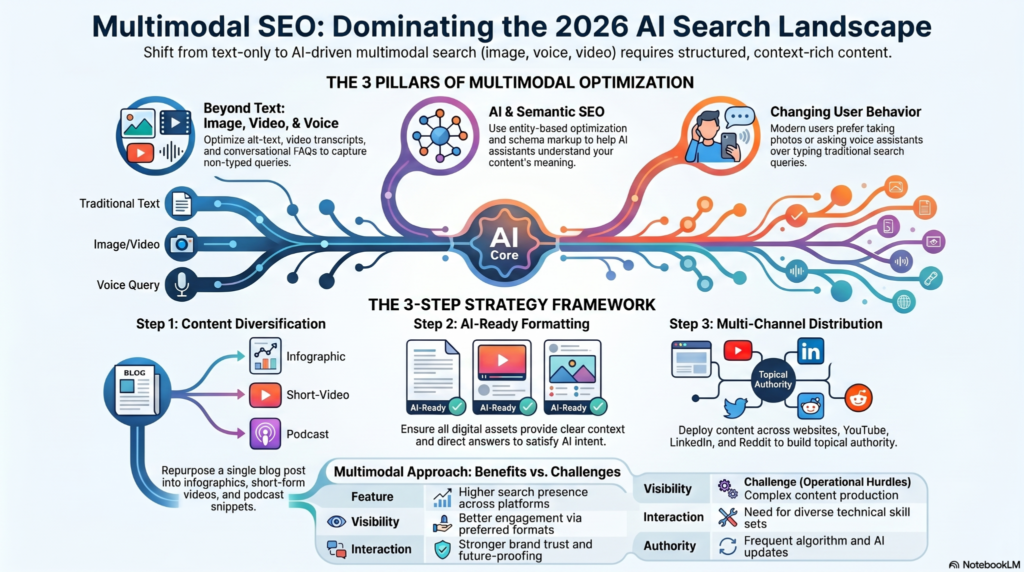
Multimodal SEO: The Complete Visibility Formula
Why Multimodal SEO Matters?
The three key reasons why multimodal SEO matters in 2026 and beyond are listed below.
1. Changing User Behaviour
Users now:
- Take photos instead of typing queries.
- Ask voice assistants for answers.
- Watch videos instead of reading blogs.
In short, fewer typed queries into Google Search and more exploring the new ways of search.
2. AI-Powered Search Engines
Platforms like Google Search are rapidly evolving into AI-driven assistants that provide direct, conversational answers rather than simply listing links. Instead of requiring users to click through multiple pages, these systems analyze content, understand intent, and present the most relevant information instantly.
This shift means brands must focus on creating clear, well-structured, and informative content that AI can easily interpret & surface, increasing the chances of being featured in these direct responses.
3. Increased Visibility Opportunities
Optimizing for multiple formats allows businesses to tap into a wider range of traffic sources, as users discover content not just through traditional results on Google Search but also via video platforms like YouTube and visual tools such as Google Lens. This approach naturally leads to higher engagement because users can interact with content in the format they prefer, whether that’s reading, watching, or listening.
Over time, consistent presence across these platforms strengthens brand recall, making it more likely that users will recognize and trust the brand when they encounter it again.
Core Elements of Multimodal SEO
Multimodal SEO has 5 essential elements that companies in the AI era must focus on.
1. Text Optimization (Still the Foundation)
Text will always be there, which means your brand is at least targeting one aspect of multimodal SEO.
- Keyword-rich, intent-driven content
- Structured headings (H1, H2, H3)
- Featured snippet targeting
2. Image SEO
Whether for users or AIs, images help convey the message clearly, and thus they are crucial.
- Alt text optimization
- Image compression for speed
- Contextual relevance
3. Video SEO
Hardly anyone has time to read, so it’s better to target your audience via videos.
- YouTube optimization
- Captions and transcripts
- Engaging thumbnails
4. Voice Search Optimization
Imagine getting recommended by voice assistants; your firm can do so by following the steps below.
- Conversational keywords
- FAQ-based content
- Natural language answers
5. AI & Semantic SEO
Last but not least, every online presence must be AI-friendly and target users semantically.
- Topical clusters
- Entity-based optimization
- Structured data (schema markup)
Wondering how to do it all? Fret not, because we have crafted a multimodal SEO strategy framework just for you.
Multimodal SEO Strategy Framework
In just three steps, your business can target its audience completely.
Step 1: Content Diversification
Turn one blog into:
- Infographics
- Short videos
- Podcasts
- Social media snippets
Reuse your great content and build topical authority.
Step 2: Optimize for AI Understanding
AIs prefer online content that is clear and answers users’ queries crisply.
- Use clear context
- Add structured data
- Focus on user intent
Step 3: Cross-Platform Distribution
Publish across multiple channels, such as:
- Website
- YouTube
- Instagram / LinkedIn
- Podcast platforms
- Reddit / Quora
All your company needs now is an AI + Human digital marketing company to help you with quality content, quickly.
Benefits of Multimodal SEO
Adopting a multimodal SEO approach helps businesses build a stronger and more sustainable digital presence by aligning with how modern users search & consume content across platforms like Google Search and YouTube. By optimizing content for multiple formats, brands not only expand their reach but also improve how users interact with and remember their content, ultimately strengthening long-term growth.
- Higher search visibility – Your content appears across multiple platforms and formats, increasing chances of discovery.
- Better engagement rates – Users interact more when content is available in their preferred format (text, video, or voice).
- Improved user experience – Easy-to-consume & well-structured content enhances satisfaction and usability.
- Stronger brand authority – Consistent presence across channels builds trust and credibility.
- Future-proof marketing strategy – Aligns your brand with evolving AI-driven search trends and user behaviour.
Challenges in Multimodal SEO
While multimodal SEO offers significant advantages, it also comes with practical challenges that businesses need to manage effectively, especially as platforms like Google Search and YouTube continue to evolve rapidly. Expanding beyond traditional content requires more resources, coordination, and strategic planning to ensure consistency & performance across all formats.
- Content production complexity – Creating high-quality content in multiple formats (text, video, visuals) requires more time, effort, and planning.
- Need for multiple skill sets – Teams must combine expertise in SEO, content writing, video production, design, and analytics.
- Constant algorithm changes – Search and platform algorithms are frequently updated, requiring continuous adaptation.
- Measuring performance across channels – Tracking and analyzing results becomes more complex when content is spread across different platforms.
Basically, four more reasons to engage the best digital marketing company in India, aka, Wildnet Technologies Ltd.
Future of Multimodal SEO
As AI continues to evolve, search is becoming more intuitive and user-centric across platforms like Google Search. It is shifting toward more conversational interactions, where users speak or type naturally and expect direct answers, more visual experiences driven by tools like Google Lens, and more personalized results based on individual behaviour & preferences.
This transformation is redefining how content is discovered and consumed, making it essential for businesses to adapt their strategies accordingly.
Those that embrace these changes early and optimize for this new search ecosystem will be better positioned to dominate search results and maintain a strong competitive edge in the coming years.
Conclusion
Multimodal SEO is reshaping how brands achieve visibility in today’s AI-driven world. Search is no longer limited to text on Google Search but extends to voice, video, and images, with users increasingly discovering content through platforms like YouTube & tools such as Google Lens. This shift requires businesses to move beyond traditional SEO and adopt a more integrated approach to content creation.
By delivering information in multiple formats, brands can reach a wider audience and improve engagement, as users consume content in different ways. At the same time, AI systems favour content that is structured, contextual, and rich in signals, making multimodal optimization essential for better visibility. Brands that embrace this strategy early position themselves ahead of competitors, ensuring consistent discovery, stronger user connection, and long-term growth in an evolving search landscape.
Wildnet Technologies is a leading Multimodal SEO Agency for brands in India, helping them capture and retain their customer base for the long term.
Wish to know more?
- > Chatgpt Ads Manager: How Advertisers Are Testing Openai’s New Ad Platform
- > Agentic Engine Optimization: The Future of AI-Driven Search in 2026
- > Demand Generation vs Lead Generation: What’s the Real Difference?
- > Lead Generation Strategies: Complete Guide to B2B Growth in 2026
- > How to Market Healthcare Services: 7 Proven Strategies to Attract High-Intent Patients
Contact us at info[@]wildnettechnologies.com and rule your niche for years to come.
FAQs
Question 1: How does multimodal SEO work in AI-driven search engines?
Answer 1: Multimodal SEO works by helping search engines interpret and connect different content formats, like text, images, video, and audio, using AI. This allows platforms to deliver richer & context-aware results based on how users search, whether through typing, speaking, or visual inputs.
Question 2: What role does multimodal SEO play in improving user engagement?
Answer 2: Multimodal SEO enhances user engagement by delivering content in the format users prefer, i.e., videos for quick learning, visuals for clarity, or audio for convenience. This improves time on page, interaction rates, and the overall user experience, which, in turn, indirectly boosts search performance.
Question 3: How is multimodal SEO different from traditional SEO?
Answer 3: Traditional SEO focuses mainly on text, while multimodal SEO includes multiple content formats and AI understanding.
Question 4: What are examples of multimodal search?
Answer 4: Voice search, image search via tools like Google Lens, and video-based search are common examples.
Question 5: How can businesses implement multimodal SEO?
Answer 5: By creating diverse content formats, optimizing for AI systems, and using structured SEO strategies.