
The digital search landscape is evolving faster than most businesses can keep up with. What worked six months ago might already be outdated today. Algorithms shift, user behaviour changes, and competition intensifies – making SEO a continuous process rather than a one-time setup.
This raises a critical question for every business investing in growth: to improve your website’s SEO performance, when should you consider updating your SEO plan?
The answer isn’t “once a year” or “when traffic drops.” It’s far more strategic than that. This blog breaks down exactly when and why you should revisit your SEO plan to stay competitive, relevant, and visible.
Why Updating Your SEO Plan Is Non-Negotiable
SEO is not static. Search engines constantly refine how they rank content, prioritising user intent, content quality, and experience signals.
If your SEO plan isn’t evolving alongside these changes, your rankings, traffic, and conversions will eventually decline.
To truly understand to improve your website’s SEO performance, when should you consider updating your SEO plan? You need to treat SEO as a dynamic growth engine – not a fixed checklist.
1. When Your Website Traffic Starts Declining
A sudden or gradual drop in traffic is one of the clearest signals that your SEO plan needs an update.
This could be due to:
- Algorithm updates – Changes in search engine rules that can impact how your website ranks in search results.
- Increased competition – More businesses are targeting the same keywords, making it harder to maintain or improve rankings.
- Outdated content – Content that no longer reflects current information, reducing its relevance and search visibility.
- Technical SEO issues – Backend problems like slow speed, broken links, or poor site structure that negatively affect rankings.
Ignoring this signal can lead to long-term loss of visibility.
Instead, this is the moment to audit your performance and realign your strategy using advanced SEO Services that match current ranking factors.
2. After Major Google Algorithm Updates
Google rolls out multiple updates every year, many of which significantly impact rankings.
These updates often focus on:
- Content quality – The relevance, depth, and usefulness of your content in meeting user intent and search expectations.
- User experience – How easily users can navigate, interact with, and engage on your website across devices.
- Spam detection – Search engines identify and filter low-quality, manipulative, or irrelevant content.
- AI-generated content evaluation – How search engines assess AI-created content for originality, accuracy, and value.
If your rankings fluctuate after an update, it’s a direct indication that your SEO plan needs recalibration.
Understanding to improve your website’s SEO performance, when should you consider updating your SEO plan? becomes critical here to maintain visibility and recover quickly.
3. When Your Business Goals Change
Your SEO strategy should always align with your business objectives.
If your company:
- Launches new services – Introducing new offerings that require fresh keywords, pages, and SEO targeting.
- Targets a new audience – Shifting focus to a different customer segment with unique search behaviour and intent.
- Expands to new locations – Entering new geographic markets that need location-specific SEO strategies.
- Repositions its brand – Changing brand identity, messaging, or value proposition, requiring SEO realignment.
…your SEO plan must evolve accordingly.
Scaling effectively often requires leveraging the Best Digital Marketing Services in India to align SEO with business growth.
4. When Your Content Becomes Outdated
Content freshness plays a major role in SEO performance. Outdated blogs and pages lose relevance over time.
Signs include:
- Old data or statistics – Information that is no longer current, reducing credibility and relevance.
- Declining rankings – A drop in your website’s position on search engines for target keywords.
- Reduced engagement – Lower user interaction, such as decreased time on page, clicks, or scroll depth.
- Broken links – Links that no longer work, leading to errors and negatively impacting user experience and SEO.
Refreshing content is one of the most effective ways to boost rankings.
This is another clear scenario where to improve your website’s SEO performance, when should you consider updating your SEO plan? becomes highly relevant.
5. When Competitors Start Outranking You
If competitors suddenly rank above you, it’s a strong indicator they’ve upgraded their strategy.
This could involve:
- Better keyword targeting – Focusing on high-intent, relevant keywords that align closely with what users are searching.
- Stronger backlinks – Gaining high-quality links from authoritative websites to boost credibility and rankings.
- More relevant content – Creating content that directly matches user intent and answers their queries effectively.
- Improved UX – Enhancing site design, speed, and navigation to deliver a smoother and more engaging user experience.
To stay competitive, businesses must continuously refine their approach using modern SEO Services.
6. When You Notice Low Conversion Rates
Traffic alone doesn’t drive business growth – conversions do.
Low conversions often mean:
- Misaligned search intent – Targeting keywords that don’t match what users actually want, leading to low conversions.
- Weak content strategy – Lack of clear planning or direction in content, resulting in low relevance and poor SEO performance.
- Poor landing page optimisation – Pages not designed to engage or convert visitors effectively due to weak structure, content, or UX.
Updating your SEO plan to focus on intent-driven content can significantly improve ROI.
7. When New SEO Trends and Technologies Emerge
SEO is rapidly evolving with:
- AI-driven search – Search engines using artificial intelligence to understand intent and deliver more personalised, context-based results.
- Voice search – Users searching through spoken queries, requiring content optimised for natural, conversational language.
- Semantic SEO – Optimising content around meaning, context, and intent rather than just exact-match keywords.
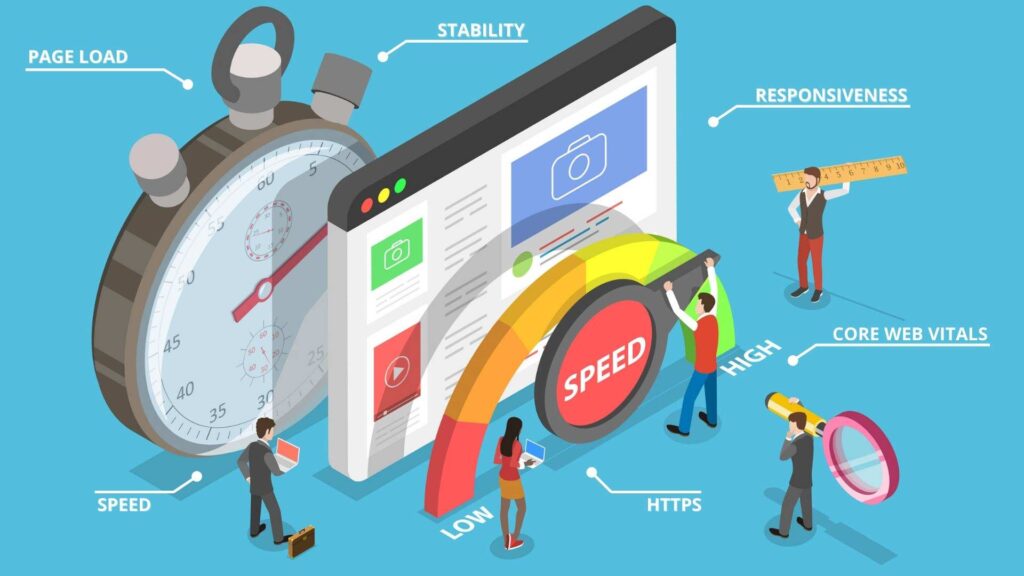
- Core Web Vitals – Google’s performance metrics that measure page speed, responsiveness, and visual stability for a better user experience.
To remain competitive, your strategy must adapt.
This is where understanding to improve your website’s SEO performance, when should you consider updating your SEO plan? becomes essential for future-proofing your growth.
8. When Your Website Undergoes Structural Changes
Website updates can directly impact SEO performance.
Examples include:
- Website redesign – Revamping the site’s layout and structure, which can impact SEO elements like navigation, speed, and indexing.
- URL changes – Modifying page URLs, which can affect rankings if not properly redirected and optimised.
- CMS migration – Moving your website to a new content management system, potentially impacting technical SEO and site performance.
- New page additions – Creating new pages that require proper optimisation, internal linking, and indexing to perform well in search.
Without updating your SEO plan, these changes can negatively affect rankings.
9. When You’re Not Ranking for Target Keywords
If your target keywords aren’t ranking, your strategy needs revision.
Common issues:
- Poor keyword targeting – Choosing keywords that are irrelevant, too competitive, or not aligned with user intent.
- Weak content depth – Content that lacks detailed information, insights, or value, making it less competitive in search rankings.
- Low domain authority – A weaker website credibility due to fewer quality backlinks and limited trust signals.
- On-page SEO gaps – Missing or poorly optimised elements like meta tags, headings, keywords, and internal links that affect rankings.
Revisiting your keyword and content strategy is essential in this situation.
How Often Should You Update Your SEO Plan?
There’s no fixed rule, but a strong SEO framework includes:
- Monthly performance tracking – Regularly monitoring key SEO metrics like traffic, rankings, and engagement to identify trends and issues.
- Quarterly strategy updates – Reviewing and refining your SEO plan every few months to stay aligned with goals and market changes.
- Immediate action during major changes – Quickly updating your SEO strategy in response to algorithm updates, traffic drops, or site changes.
Brands that use the Best Digital Marketing Services in India often adopt continuous optimisation rather than reactive fixes.
Final Thoughts
SEO today is not about static execution – it’s about continuous evolution, data-driven decisions, and strategic agility.
If you’re still asking to improve your website’s SEO performance, when should you consider updating your SEO plan? The answer is simple: whenever your performance data, competition, or technology landscape shifts.
Businesses that update their SEO strategies proactively don’t just maintain rankings—they dominate search visibility and capture long-term growth opportunities.
This is where Wildnet Technologies Ltd. stands out as a performance-driven leader. As a trusted name delivering advanced digital strategies, Wildnet Technologies Ltd. combines data intelligence, AI-driven insights, and industry expertise to help brands scale faster. By aligning your SEO roadmap with future-ready execution, they ensure your business stays ahead in an ever-evolving search ecosystem.
FAQ
When should you update your SEO plan?
You should update your SEO plan whenever your website shows signs of performance changes – such as declining traffic, ranking drops, low conversions, or after major algorithm updates, business changes, or new SEO trends emerge.
When should you improve your website’s SEO performance?
You should improve your website’s SEO performance whenever you notice declining traffic, lower rankings, poor conversions, increased competition, or changes in search algorithms, business goals, or website structure.
What are the 3 C’s of SEO?
The 3 C’s of SEO are Content, Code, and Credibility — quality content that matches user intent, optimised technical structure (code), and strong authority through backlinks and trust signals.
How do I know if my SEO plan is no longer effective?
If you notice declining traffic, lower keyword rankings, reduced engagement, or fewer conversions, it’s a clear sign your SEO plan needs to be updated.
How often should I review my SEO strategy for best results?
You should monitor performance monthly and update your SEO strategy quarterly, while making immediate changes after major updates or performance drops.
Read More
- How to Choose an SEO Agency in 2026: Every Business Must Know
- User Intent SEO: The Key to Smarter Rankings and Conversions in 2025
- The Ultimate Guide to Robots.txt Generator: Create, Customize, and Optimize for Better SEO
- Understanding Entity SEO: A Comprehensive Guide