


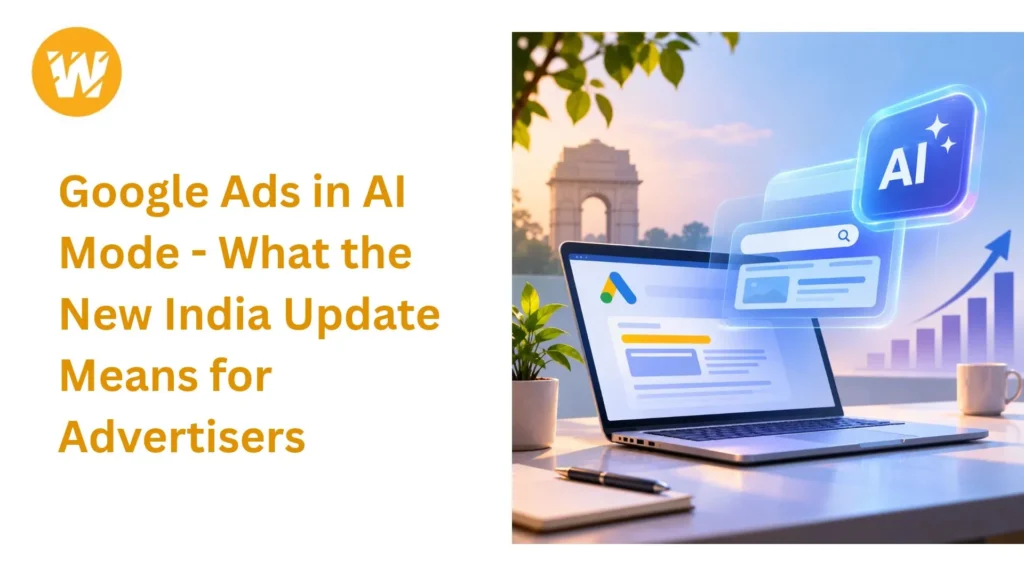
Your customers are changing how they search, and your ad budget may not have caught up yet. People no longer type two or three words and scroll through ten blue links. They ask full questions and expect a clear answer in one place.
Google has now put ads into that experience in India. On October 28, 2026, Google said it is bringing ads in AI Mode to new countries, and India is one of them. If you run paid campaigns, this update affects where your ads can show and how people find you. A trusted Google PPC agency can help you read these changes without guesswork.
This guide explains what is new, what it means for your budget, and what you can do this month.
Key Takeaways
Organic content still shapes how AI answers are built, so an AI search optimization agency can help your paid and organic work, and they support each other. Here are the points that matter most.
- Ads now appear inside AI Mode in India, clearly labelled as “Sponsored.”
- There is no separate AI Mode campaign to create. Eligible campaigns can show ads there automatically.
- Search campaigns with broad match, AI Max, Shopping campaigns and Performance Max are the main routes in.
- Clean product data, strong landing pages and accurate conversion tracking matter more than ever.
- Reporting for AI Mode is limited, so judge results by business outcomes, not clicks alone.
What Are Google AI Mode Ads?
AI Mode is Google’s conversational search experience. People ask longer, more detailed questions and get an AI-written answer with links. Google AI Mode ads are sponsored results placed inside or next to that answer. Google says queries in AI Mode are on average three times longer than traditional searches, and ads are labelled “Sponsored.” Users can ask follow-up questions and receive contextual responses.
Think of a founder in Delhi who types, “I need an accounting tool for a 15-person company that works with GST.” That is a far richer signal than “accounting software.” Ads in this space can match that detailed need, which is why this format is interesting for serious buyers. If you are a Delhi-based business, a PPC agency in Delhi can show you how these conversational searches look in your own market.
What Is New in the India Update?
India was not the first country to see AI Mode itself. The new part is the wider rollout of ads. Google is expanding ads in AI Mode to India along with Australia, Canada, Kenya, Malaysia, New Zealand, Nigeria, Pakistan, the Philippines and Singapore. Google has also said that click-through rates on sponsored and organic product list items in AI Mode are already similar, though that figure comes from its own US data. Indian results may differ, so test before you assume.
One more detail is worth noting. Multiturn ads, which show up in follow-up questions, are launching only in the US for now.
How Is It Different from Regular Search Ads?
Regular search ads follow your keywords closely. AI Mode ads follow the meaning of the whole question. The ad still has to be relevant, but it matches a conversation, not just a phrase. That is why Google ads with AI work best when your campaigns give Google plenty of good information to work with.
Which Campaigns Can Show in AI Mode?
You do not need to build anything new. Google has named Performance Max, Shopping, and Search campaigns using broad match, including AI Max for Search, as eligible for AI Mode ads. Eligible campaigns are included by default, and advertisers cannot choose to target AI Mode.
Here is a simple way to see where you stand.
- Performance Max: Works across Google channels and is eligible.
- Search with broad match: Eligible, especially when paired with smart bidding.
- AI Max for Search: Extends broad-match style reach to phrase and exact keywords.
- Shopping campaigns: Eligible, and they depend heavily on your product feed.
- Strict exact-match-only Search: Likely to miss most of this inventory.
Negative keywords and brand exclusions still apply, so you keep some control over where you appear.
How Do These Advertisements Work?
Google uses different approaches to match advertisements.
1. Direct Query Matching
Google matches advertisements with relevant search queries. For example, someone searching for affordable CRM software may see relevant software advertisements.
2. Contextual Matching
Google considers the complete search conversation. It also considers information within AI-generated responses.
For example, someone researching website conversions might receive CRO service advertisements.
3. AI-Powered Campaign Targeting
AI-powered targeting helps identify relevant advertising opportunities. Broad match, AI Max for Search, and Performance Max support different targeting approaches.
Advertisers should regularly review their campaign settings. This helps maintain relevance and control spending.
What the Update Means for Different Businesses
The effect depends on what you sell. Here are three practical examples.
An online fashion brand. A buyer asks AI Mode for “breathable cotton kurtas for summer weddings under ₹3,000.” Your Shopping ads need accurate titles, prices, sizes and images. A messy feed means a missed chance.
A B2B software startup. A buyer asks which CRM suits a small sales team. Your landing page must answer that question quickly and show clear pricing or a demo option.
A local education business. A parent asks about coaching with small batch sizes near them. Your ad copy and location settings should speak to that exact worry.
In all three cases, the better your data and pages, the better the match.
How to Get Ready: A Practical Checklist
You can act on this without changing your whole strategy. Start with these steps.
- Review campaign types. Check whether you run Performance Max, Shopping or broad-match Search. If you rely only on exact match, consider a controlled test of AI Max.
- Fix your product feed. Use clear titles, correct prices, current stock and good images.
- Strengthen landing pages. Answer common questions directly. Add pricing, proof and a simple next step.
- Check conversion tracking. Count leads, calls and sales, not only clicks. Smart bidding learns from this data.
- Add negative keywords and brand exclusions. Keep irrelevant or sensitive queries away from your budget.
- Test with a ring-fenced budget. Give new settings a fair test and compare lead quality, not only cost per click.
Reporting and Measurement: What to Expect
Here is the honest part. Advertisers currently cannot see performance for AI Mode separately from other ad slots. That means you may notice changes in results without a clear label saying why.
So look at the full picture. Track cost per qualified lead, sales, and revenue by campaign. Compare week-on-week trends after any change to match types or AI features. Change one thing at a time so you can learn from it.
Do Organic and Paid Work Together Here?
Yes, and this is easy to miss. AI Mode builds its answers from web content, so clear, trustworthy pages help both your organic visibility and your landing page quality. Strong content gives AI systems more to understand about your business. Paid ads then let you appear when the question is highly commercial.
Start Small, Measure Well
Google ads with AI are now part of the Indian search scene. You do not need to panic or rebuild your account. You do need to check your campaign types, tidy your data and measure results by real business outcomes.
At Wildnet Technologies, we help businesses plan, run and improve paid campaigns across Google and other platforms. If you want a clear view of how this update affects your account, talk to our team and book a free PPC consultation today.
Frequently Asked Questions
