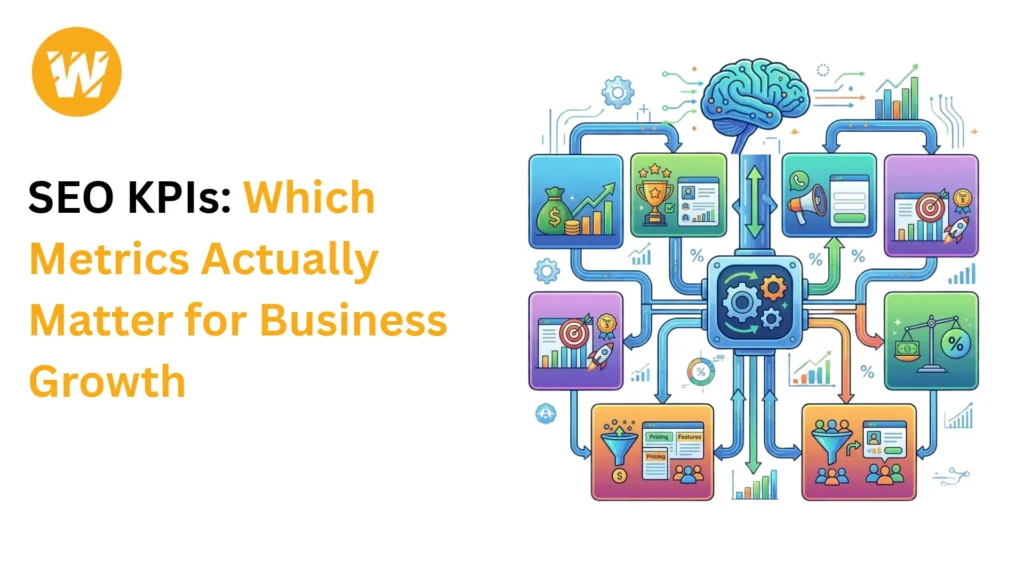
Your SEO report has forty metrics. Your boss asks one question: Is it working? Most reports cannot answer that because too many numbers bury the real story.
Many businesses check rankings, traffic, and backlinks every month. But these numbers don’t always show real progress. Some look good but bring few business results. Others help you find ways to get more leads and sales.
The key is tracking numbers that match your goals. This guide explains which SEO KPIs matter most. You’ll also learn how to track and report them.
Need a clear plan? Our SEO services team builds reports that focus on growth.
What Are SEO KPIs?
SEO KPIs are key performance indicators for organic search. They measure progress toward a business goal. Think of them as your scoreboard.
A KPI is not the same as a supporting metric. A KPI ties directly to a goal, like leads or revenue, and a supporting metric adds context. Bounce rate and page count are good examples, as they help you diagnose problems, but they are not the final score.
15 Key KPIs That Your SEO Company Should Monitor
Here are the 15 key KPIs, grouped by what they show.
Search Visibility and Rankings
1. Keyword rankings. This shows where your pages appear for target searches. Track priority terms, not every keyword.
2. Search impressions. This counts how often your pages show in results. Rising impressions mean growing reach.
Organic Traffic and CTR
3. Organic traffic. These are visits from unpaid search. It shows if demand for your pages is growing.
4. Click-through rate (CTR). This is the share of people who click after seeing your result. A low CTR often means weak titles.
Backlinks and Authority
5. Referring domains. This counts unique sites linking to you. Quality matters more than volume.
6. Authority score. Tools rate how trusted your site looks. Use it to compare yourself with rivals.
Engagement and Landing-Page Performance
7. Engagement rate. This shows how many visitors actually interact with your page. Low numbers hint at poor content fit.
8. Top landing-page performance. Check which entry pages bring visits and conversions. Double down on the winners.
Organic Conversions and Revenue
9. Organic conversions. These are leads, sign-ups, or sales from search. This is the number leaders care about.
10. Organic conversion rate. It shows how well search visitors turn into customers.
11. Organic revenue. This ties SEO directly to money earned. It is your strongest proof of value.
Technical SEO and Indexing
12. Indexed pages. This shows how many pages Google has stored. Missing pages cannot rank.
13. Core Web Vitals. These scores measure loading speed, stability, and responsiveness. Slow pages lose visitors.
14. Crawl errors. These are problems that stop Google from reading your pages. Fix them fast.
AI Search Visibility
15. AI citations and mentions. This tracks how often AI answers cite or name your brand. It is a new but growing signal.
Which of These Are Important KPIs to Consider for SEO?
Not every KPI deserves equal weight. The best SEO KPIs depend on your situation.
Start with your goal. A store cares about organic revenue; a publisher cares about traffic and engagement, and a service firm wants qualified leads.
Competition also affects which SEO metrics you should track. In busy markets, focus on rankings and website authority. Your website’s age and progress matter too. New websites should track indexing and search impressions, while older websites should focus more on leads and sales.
Pick five to seven KPIs. Review them monthly. Drop any that no longer guide a decision.
What Are Technical SEO KPIs?
Technical SEO KPIs show how easily Google can find and read your site. Weak technical health holds back even great content.
Keep an eye on these important technical SEO areas:
Indexing status:
Check how many pages Google has indexed and which pages are excluded
Crawlability:
Make sure Google can access and crawl your important pages
Core Web Vitals:
Check whether your pages load quickly and work smoothly for visitors
Crawl errors:
Look for broken links, server issues, and redirect problems that may affect your website
Check them monthly. A sudden drop often signals a hidden fault.
SaaS SEO KPIs – Which Metrics Matter Most?
SaaS SEO KPIs go deeper than traffic. Software buyers take longer to decide. So you need to follow the whole path.
Start with qualified organic leads. These are visitors who fit your buyer profile; then, track organic sign-ups and demo requests. They show real buying interest.
Then measure trial-to-paid conversions from organic users. This reveals lead quality. Finally, watch organic revenue and customer acquisition cost. Together, they show if SEO pays for itself.
AEO KPIs vs. SEO KPIs: What’s the Difference?
AEO means answer engine optimization. It focuses on being named in AI answers. The AEO KPIs vs SEO KPIs difference is simple. SEO measures clicks. AEO measures presence.
| Area | SEO KPIs | AEO KPIs |
| Visibility | Keyword rankings | AI answer visibility |
| Reach | Organic clicks | Brand citations |
| Awareness | Impressions | Brand mentions |
| Traffic | Organic sessions | AI referral traffic |
| Outcome | Conversions | Conversions from AI visits |
Explore our AI SEO services to support your wider search visibility strategy.
How to Track and Report SEO KPIs
You do not need fancy tools to start. A few free ones go a long way.
Google Search Console shows impressions, clicks, CTR, and indexing issues. Google Analytics 4 tracks engagement, conversions, and revenue from organic visits. SEO tools like Semrush add rankings, backlinks, and competitor data.
Pull these into one dashboard. Keep it simple. Show trends, not just snapshots.
Report monthly, and add short notes. Explain what changed, why, and what you will do next. Numbers without context confuse people. If you need hands-on help, our AI SEO agency in Noida can set this up for you.
Frequently Asked Questions