

What are the actual Facebook Ads cost?
It’s one of the top questions marketers, business owners, and side hustlers ask when stepping into social media advertising.
In this post, we, as the best digital marketing services provider, will break down Facebook Ads cost in a way that’s easy to understand, dig into what drives that cost, and share actionable tips to get more bang for your ad spend.
Let’s roll up our sleeves and dive in.
What Does Facebook Ads Cost Even Mean?
Before we jump into numbers, let’s clarify what we mean by Facebook Ads cost. Facebook (Meta) doesn’t charge a fixed fee per ad campaign. Instead, your cost depends on metrics like:
- CPC (Cost Per Click) – how much you pay for someone to click your ad
- CPM (Cost Per Mille / Cost per 1,000 impressions) – what you pay for 1,000 views/impressions
- CPL (Cost Per Lead) – how much it costs to get a lead (if your goal is leads)
- CPA or Cost Per Action / Conversion – how much it costs for someone to do the action you want (buy, sign up, etc.)
Facebook’s ad system (the ad auction) takes into account how much you bid, how relevant your ad is, competition, and more. So your Facebook Ads cost is really a dynamic outcome, not a fixed number.
Current Benchmarks: What Are the Averages?
As per Shopify, here are some useful benchmarks. [You can use these as reference points, but don’t expect your results to match exactly.]
- Average CPC: ~$0.69 per click
- Average CPM: ~$12.58 per 1,000 impressions
- Average CPL: ~$8.68 per lead
These are global or U.S./Western-market averages. In different geographies (like India, Southeast Asia, Latin America), these numbers may be lower or higher, depending on competition, audience, and industry.
Also, note that Facebook charges you based on those metrics (CPC, CPM, etc.), but your actual business goal might be cost per sale, ROI, or profit margin, which matters more in the long run.
Key Factors That Influence Facebook Ads Cost
Your ad costs don’t exist in a vacuum. Below are major levers and factors that influence what you pay.
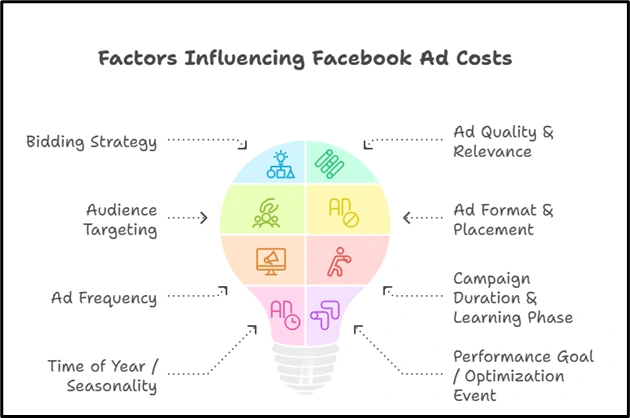
Image 1.1. Infographic showing factors influencing Facebook Ads cost
1. Bidding Strategy
When you set up a campaign, you choose a bidding method. Some options include:
- Automatic or “maximize results” bidding – Facebook tries to get you the result (click, conversion) at the lowest cost within your budget
- Manual bidding / bid cap – You set a maximum you’re willing to pay per result
- Goal-based bidding – Facebook optimizes to hit your objective, e.g. conversions, link clicks, etc.
If you bid too low, your ads might not get shown. If you bid too aggressively, you could overspend. A bid cap helps you limit cost, but might restrict how often or where your ad is shown.
2. Ad Quality & Relevance
Facebook rewards ads that users find valuable. That means if your ad is relevant, high quality, engaging, and gets good feedback (clicks, shares, etc.), you’ll often pay less per result.
Facebook’s algorithms want to show relevant ads to users, not spammy ones.
Facebook even provides relevance diagnostics (quality, engagement, conversion) to help you see if your ad is resonating.
3. Audience (Targeting)
Who you show your ad to matters big time:
- Narrow, highly targeted audiences often cost more per click or impression (because you’re fighting more competition)
- Broad audiences may cost less per click, but your conversions might suffer
- Factors like age, gender, interests, location, device, and behavior all shift cost
- If you target a high-value demographic (e.g. certain income levels, urban users), costs can rise
It’s often better to start slightly broader and let Facebook optimize, then narrow down over time.
4. Ad Format & Placement
Where and how your ad shows up impacts cost:
- Facebook offers many placements: News Feed, Stories, Instagram, Messenger, Audience Network, etc.
- Some placements cost more (e.g. prime News Feed spots)
- Formats (image, video, carousel, collection, etc.) also affect costs
- Allowing automatic placements (letting Facebook decide) often gives better cost efficiency than manually restricting placements
5. Ad Frequency
If your ad is shown too many times to the same people, they stop responding. That’s “ad fatigue.” As frequency increases, costs go up (lower engagement, fewer clicks). So you want to manage frequency or cap it.
6. Campaign Duration & the Learning Phase
Every time you launch or significantly change an ad set, Facebook goes through a “learning phase” (testing different audiences, placements, etc.) to figure out what works. It might take ~50 optimization events in a week to exit the learning phase.
During that phase, performance can fluctuate. Also, long campaigns run the risk of audience fatigue or shifts in cost (seasonal, competitive changes).
7. Time of Year / Seasonality
Certain times (Black Friday, holidays, big shopping seasons) see more competitors bidding heavily. That pushes costs up. If you run ads during high-competition periods, expect to pay more.
8. Your Performance Goal / Optimization Event
The goal you pick determines what Facebook optimizes for. If your goal is brand awareness, the cost structure will favor getting impressions (CPM). If your goal is conversions, Facebook will try to show ads to people likely to convert, which may cost more because those user segments are more competitive.
Also, the action you measure (e.g. button click, landing page view, purchase) has different levels of difficulty and cost.
Estimating What “Your” Facebook Ads Cost Might Be
Given all these moving pieces, it’s natural to want a rough estimate or ballpark for your situation. Here’s how to think about it.
- Pick your goal: traffic, conversions, leads, etc.
- Start with a small budget: test with maybe $5–$20/day (or local equivalent)
- Use benchmark CPC/CPM as reference (e.g. $0.50–$1.00 CPC in many markets)
- Simulate: if you get 100 clicks at $0.70 CPC, you spend $70; if 2% convert, that’s 2 sales, so cost per sale = $35
- Adjust: based on performance, refine targeting, creative, and bids
In markets like India or Southeast Asia, because competition (and cost of doing business) is often lower than in the U.S., you might see CPCs that are lower, say $0.10–$0.50 depending on niche and audience. But that’s very approximate and depends heavily on the industry.
How to Reduce Facebook Ads Cost (Without Killing Performance)
Lowering costs isn’t just about paying less; it’s about getting more value for the money you spend. Here are strategies:
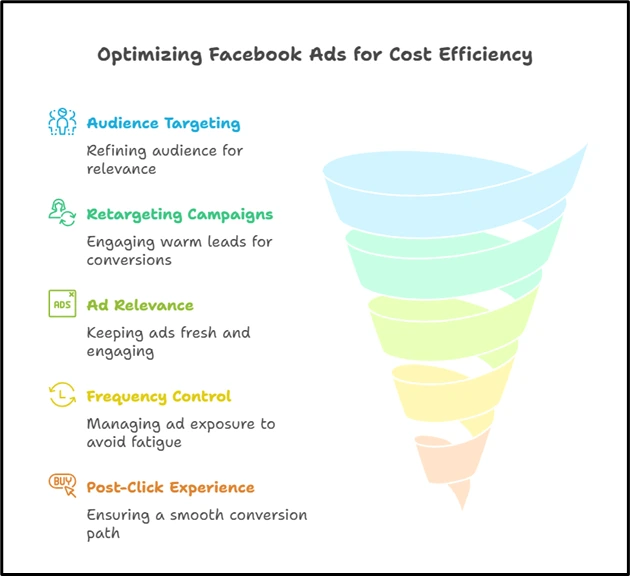
Image 1.2. Infographic showing steps to optimize Facebook Ads budget
Step 1: Choose the Right Objective / Goal
Ensure your campaign objective aligns with what you actually want (traffic, conversions, awareness). Wrong objectives can lead to wasted spend.
Step 2: Use Refined & Smart Audience Targeting
- Start with a broader audience, then narrow
- Use lookalike audiences (people similar to your best customers)
- Exclude audiences who are irrelevant (e.g. people who already purchased, people who visited your site recently)
- Use custom audiences (website visitors, email lists, etc.) to retarget
Step 3: Retargeting Campaigns
Retargeting (showing ads to people who already engaged with you: visited site, added to cart, etc.) often yields the cheapest cost per conversion because these audiences are already warm leads.
Step 4: Keep Your Ads Relevant & Fresh
- Use creatives tuned to your audience’s interests
- Avoid clickbait or misleading copy
- Refresh ad creatives often to avoid ad fatigue
- Use engaging formats (video, carousels)
- Test multiple versions (A/B testing)
Step 5: Monitor and Control Frequency
Cap how many times a person sees your ad. If frequency shoots up (2–3+), performance often drops.
Step 6: Optimize the Post-Click Experience
A wasted click is still a cost. If your landing page loads slowly, is confusing, or isn’t mobile-friendly, your conversion rate falls, making the cost per conversion much higher. Shopify’s article emphasizes fast load times, mobile optimization, and relevant landing pages.
Step 7: Use Exclusions Wisely
Don’t show ads to people who already converted or those unlikely to convert. Exclusions reduce waste.
Step 8: Test Constantly (A/B Testing)
Always be experimenting with new ad creatives, messaging, images/videos, placements. The small win might reduce your cost per conversion significantly.
Common Myths & Misconceptions
Let’s bust a few myths around Facebook Ads cost:
Image 1.3. Visual representation of Myths that lead to ineffective strategies
Myth: You must spend $1,000+ to see results.
Nope. You can start small. Use a modest budget to test and validate before scaling up.
Myth: Cheaper clicks are always better.
A cheap click that never converts is worthless. Focus on cost per meaningful action (sale, lead), not just low CPC.
Myth: Once an ad works, you leave it forever.
Market conditions, ad fatigue, competitor bids change. You’ll need to refresh, retune, monitor.
Myth: You can set it and forget it.
Ads require oversight. Monitor metrics, tweak targeting, creative bids continuously.
Facebook Ads Cost in India / For Indian Businesses (Considerations)
Since you are in India (or many readers might be), here are pointers specific to Indian (or similar) markets:
- Ad costs in India tend to be lower than in highly competitive Western markets (though competition in metro cities, popular demographics, or niche segments can drive costs up).
- The audience characteristics (languages, device types, internet speed) can impact your ad creatives, landing pages, and thus your cost efficiency.
- Mobile usage is very high; ensure your ad and landing page are optimized for mobile.
- Payment, bidding currencies, and budget tolerances differ. Make sure your campaigns are set in appropriate currencies and budget sizes.
- Always localize your content (images, copy) to cultural tastes, vernacular, etc. Better relevance leads to better performance and lower cost.
Sample Breakdown: “What If I Spend $100?”
Let’s walk through a simplified hypothetical scenario:
- You allocate $100 to a campaign.
- Suppose your CPC is $0.50 (depending on niche).
- You might get 200 clicks ($100 ÷ $0.50 = 200).
- If your conversion rate (click → sale) is 2%, you’ll get 4 sales.
- So cost per sale = $100 ÷ 4 = $25.
If your product sells for $80, your return might be solid; but if your product sells for $20, you’d lose money. So you must check your margins, conversion rates, and keep optimizing.
Also, by tweaking targeting, creative, and landing pages, maybe you reduce CPC to $0.40, or boost conversion rate to 3%.
Then you’d get 250 clicks or 7.5 sales (round down to 7), making cost per sale ≈ $14–15. See the levers?
Tracking & Metrics You MUST Watch
To understand and optimize Facebook Ads cost, monitor:
- CPC, CPM, CTR (Click Through Rate)
- Conversion Rate (Clicks → Desired action)
- Cost Per Conversion / CPA
- Return on Ad Spend (ROAS)
- Frequency (how many times people see your ad)
- Relevance Score / Diagnostics
- Ad spend by placement, time, creative, etc.
- Attribution window effects (how far back a conversion is credited)
These metrics help you see if your ads are efficient or bleeding money.
When Are Facebook Ads Worth It?
You may wonder: is FB Ads always a good idea? The answer: not necessarily always, but often yes, if done wisely. Here are scenarios where they make sense:
- You have a product or service that can scale
- You have or likely build a target audience
- You have margins that can absorb ad costs
- You can track conversions properly
- You’re willing to experiment and iterate
If you’re just starting and have no product-market fit, you might want to validate your product first through lower-cost channels before investing heavily in Facebook paid ads.
Summing Up
- Facebook Ads cost isn’t a fixed number, it’s shaped by several factors: bid strategy, relevance, audience, format, frequency, seasonality, and your chosen goal.
- Use benchmarks (CPC ~ $0.69, CPM ~ $12.58, CPL ~ $8.68) as rough guides, but expect variance.
- Focus on cost per meaningful action (sale, lead), not just low clicks.
- Use strategies like retargeting, good creatives, exclusions, and testing to improve efficiency.
- In markets like India, you may see lower costs, but only if your targeting, creative, and tracking are good.
- Always monitor metrics, refine, and adapt. Ads are not “set-and-forget.”
If you’re looking for social media marketing services, get in touch with us at Wildnet today.
FAQs
Question 1. How much does Facebook Ads cost on average?
Answer. The cost of Facebook Ads varies widely depending on your industry, audience, location, bidding strategy, and ad quality. On average, CPC (cost per click) ranges from $0.40 to $1.00 globally, and CPM (cost per 1,000 impressions) is about $12.58. However, in markets like India, CPC can be significantly lower — sometimes as low as $0.10–$0.50.
Question 2. What factors influence Facebook Ads cost?
Answer. Several factors affect the cost, including:
- Your bidding strategy (automatic vs. manual)
- Audience targeting (size and competitiveness)
- Ad relevance and quality
- Placement (News Feed, Stories, Instagram, etc.)
- Seasonality and competition
- Campaign objective (awareness, traffic, conversions)
Question 3. Can I run Facebook Ads with a small budget?
Answer. Yes. Facebook allows you to start campaigns with as little as $1–$5 per day, making it accessible for small businesses and individuals. Starting small is recommended to test your audience, ad creative, and strategy before scaling your budget.
Question 4. How can I lower my Facebook Ads cost without hurting results?
Answer. You can lower costs by:
- Optimizing your audience targeting
- Improving ad relevance and quality
- Using retargeting campaigns
- Testing ad creatives frequently
- Avoiding audience fatigue by capping frequency
- Choosing automatic placements
- Improving your landing page experience
Question 5. Is a lower CPC always better?
Answer. Not necessarily. A lower CPC can mean more clicks, but if those clicks don’t convert, your overall ROI suffers. The true measure of success is your cost per meaningful action (sale, lead, signup) rather than just CPC.
Read More:
- How To Download Leads From Facebook Ads Manager?
- Facebook Lead Ads’ Major Benefits for Your Business
- How to use Meta Creator Studio for Facebook and Instagram in 2025?
- How Much Does It Cost To Run Ads On Instagram?
- Advantages & Disadvantages of Social Media