
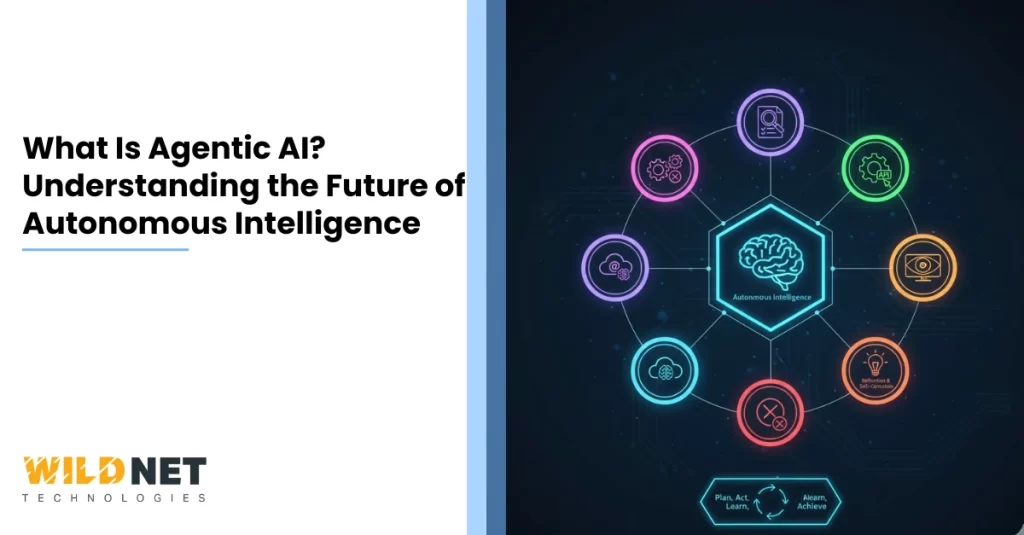
In the ever-evolving landscape of artificial intelligence, a new paradigm is emerging: Agentic AI. This advanced form of AI goes beyond traditional reactive systems by exhibiting autonomy, adaptability, and decision-making capabilities. But what exactly is Agentic AI, and how does it differ from other AI models?
Defining Agentic AI
Agentic AI refers to AI systems that can independently set goals, make decisions, and take actions to achieve those goals without continuous human intervention. Unlike traditional AI, which typically responds to specific inputs, Agentic AI operates proactively, analyzing its environment and adapting in real-time to accomplish complex tasks.
These systems integrate various AI techniques, including machine learning, natural language processing, and computer vision. The result is an AI that not only reacts but also plans, learns, and evolves.
Key Characteristics of Agentic AI
- Autonomy: Agentic AI can perform tasks and make decisions without human oversight, allowing for continuous operation in complex environments.
- Adaptability: These systems can adjust their behavior based on new information or environmental changes.
- Goal-Oriented: Agentic AI is designed to pursue specific objectives, employing strategies and actions aligned with its goals.
- Multi-Agent Collaboration: Multiple AI agents can work together, each handling different aspects of a task, to achieve a common goal.
- Continuous Learning: Agentic AI systems improve their performance over time by learning from their experiences.
Real-World Applications of Agentic AI
Agentic AI is being applied across industries to drive innovation and efficiency:
- Healthcare: AI agents assist in diagnosing diseases, personalizing treatment plans, and managing patient care.
- Finance: Autonomous trading systems analyze market trends and execute trades for optimized investment strategies.
- Customer Service: AI-powered chatbots and virtual assistants handle customer inquiries, improving user experience.
- Supply Chain Management: Agentic AI monitors inventory, predicts demand, and coordinates logistics efficiently.
- Smart Cities: AI agents manage traffic, energy usage, and public services for more sustainable urban living.
Learning About Agentic AI
For those looking to learn more, several educational resources are available:
- Coursera: Offers courses explaining how Agentic AI works and how to design it for specific needs.
- Udemy: Comprehensive courses include hands-on projects for building agentic AI systems.
- Johns Hopkins University: Provides a certificate program covering Python, LLMs, and AI agent development.
Challenges and Considerations
While Agentic AI offers immense potential, it also presents challenges:
- Data Quality: Poor data can lead to inaccurate decisions.
- Ethical Concerns: Autonomous decision-making raises questions about accountability and transparency.
- Security Risks: Advanced AI systems may be targets for cyberattacks.
- Job Displacement: Automation could replace certain human tasks, necessitating workforce reskilling.
The Future of Agentic AI
The trajectory of Agentic AI suggests it will play a crucial role across industries:
- Enhanced Collaboration: AI agents working alongside humans, augmenting capabilities.
- Broader Adoption: Implementation across small businesses and large enterprises.
- Regulatory Frameworks: Policies and guidelines ensuring ethical and responsible AI use.
- Continuous Evolution: Ongoing advancements in AI research leading to more sophisticated systems.
As Agentic AI continues to transform industries, businesses must stay ahead of technological advancements to remain competitive. Leveraging these intelligent systems can improve efficiency, decision-making, and customer engagement. For companies looking to maximize their online presence and reach the right audience, integrating digital marketing services alongside AI-driven insights is essential. By combining human expertise with autonomous AI capabilities, businesses can craft smarter strategies, optimize campaigns, and achieve measurable results. Embracing this synergy ensures that your marketing efforts are both innovative and effective in today’s rapidly evolving digital landscape.
Frequently Asked Questions (FAQs)
Ques 1. What is Agentic AI?
Ans: Agentic AI refers to AI systems that can independently set goals, make decisions, and take actions without continuous human intervention.
Ques 2. How does Agentic AI differ from traditional AI?
Ans: Traditional AI responds to specific inputs, whereas Agentic AI operates proactively and adapts in real-time to complex tasks.
Ques 3. What are some applications of Agentic AI?
Ans: Applications include healthcare diagnostics, autonomous trading, customer service automation, supply chain management, and smart city infrastructure.
Ques 4. What challenges does Agentic AI face?
Ans: Challenges include ensuring data quality, addressing ethical concerns, mitigating security risks, and managing potential job displacement.
Ques 5. How can I learn more about Agentic AI?
Ans: Educational resources include courses on Coursera, Udemy, and certificate programs like the one from Johns Hopkins University.
Read More
- B2B Content Marketing Strategy: How to Drive Growth and Build Lasting Business Relationships
- How to Conduct a Technical SEO Site Audit: Step-by-Step Guide
- Gen Z Marketing: Connect and Convert the Next Generation
- Why CTR SEO Matters More Than Ever